Head-to-Head: Hoka Challenger 8 vs Hyperice Hypervolt Go 2 (Detailed Comparison)
Category: Electronics (active lifestyle and recovery gear)
Introduction
When building an active lifestyle kit, choices fall into two broad categories: performance gear that helps carry an athlete through workouts and recovery tools that help the same athlete recover faster and stay consistent. The Hoka Challenger 8, a hybrid running shoe designed for road-to-trail versatility, and the Hyperice Hypervolt Go 2, a compact percussion massager focused on targeted recovery, both appear on shopping lists for people who train frequently. They are fundamentally different products, but many buyers consider both as part of the same overall regimen: one helps put quality miles on the legs, the other helps repair and maintain tissue health between sessions.
This article compares the Hoka Challenger 8 and the Hyperice Hypervolt Go 2 from the perspective of real-world use: training, commuting, travel, injury prevention and recovery, convenience, durability and cost of ownership. The aim is to help active buyers decide which device fits their priorities, or how both might work together as complementary pieces of kit.
Product overviews: what each product is meant to do
Hoka Challenger 8 — A versatile trainer for mixed surfaces
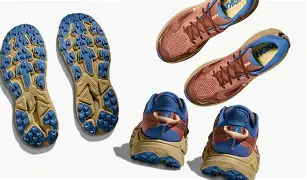
The Hoka Challenger 8 is positioned as a do-it-all shoe for runners who want a single pair to handle everything from road runs to easy trail outings. It follows Hoka’s philosophy of generous midsole cushioning and balanced geometry, offering protection and stability at moderate paces. The Challenger line traditionally blends lightweight protection, a grippy outsole for variable terrain, and an upper that balances structure and breathability.
Hyperice Hypervolt Go 2 — A compact percussion massager for targeted recovery
The Hypervolt Go 2 is a smaller, more travel-friendly member of Hyperice’s Hypervolt family. It provides percussive therapy aimed at increasing local blood flow, reducing muscle tension, and easing soreness after workouts. Designed for portability and quiet operation, this device targets users who need a straightforward, convenient recovery tool to use at home, at work, or on the go.
Detailed analysis
Design and construction
The Hoka Challenger 8 uses a layered construction common to modern running shoes: engineered mesh or synthetic upper for breathability and fit, a full-length foam midsole for cushioning, and a rubber lugged outsole tuned for mixed-surface traction. The shoe’s design priorities are cushioning, comfort, and a stable ride. The upper and sole construction reflect trade-offs between minimizing weight and maximizing durability on rough surfaces.
The Hypervolt Go 2 is an electronic device with a hard-shell body, a handle designed for single-handed use, and a single or small set of interchangeable head attachments for different contact profiles. Portability shapes its form factor: the massager is compact enough to fit in a gym bag, and its user interface is deliberately simple — a few speed settings rather than advanced programmable modes.
Performance in real-world use
For day-to-day training, the Hoka Challenger 8 performs best when a runner needs protection across varied surfaces. It soaks up hard impacts on pavement and provides additional grip and confidence when runners stray onto packed dirt or easy trails. Runners who alternate road and light trail runs, or who favor a forgiving ride for higher weekly mileage, will find the shoe’s cushioning and protection valuable.
The Hypervolt Go 2 shines after those runs. Its compact size makes it easy to apply to specific trouble spots — calves, quads, glutes, or the hip complex — delivering rapid percussive impulses that promote circulation and temporary relaxation of tight tissues. In practical terms, the massager is useful for pre-workout warm-ups to stimulate blood flow and post-workout cooldowns to reduce perceived stiffness.
Comfort and ergonomics
Comfort in the Hoka Challenger 8 depends heavily on fit: Hoka’s cushioned platform favors runners who like a soft, slightly elevated ride. The shoe’s toe box and midfoot volume can determine whether it is comfortable for long runs or day-long activities. Break-in is typically minimal, but personal foot shape dictates whether the shoe excels at long miles or is better reserved for shorter mixed-terrain outings.
Find top-rated Electronics products at great prices.
See Deals →The Hypervolt Go 2 is engineered for easy handling. Its grip and balance make it simple to hold for multi-minute applications without undue wrist fatigue. The small size reduces leverage, so reaching the upper back or hamstrings requires modest effort. Noise and vibration levels are design considerations; quieter operation improves usability in shared spaces like offices or gyms.
Durability and maintenance
Hoka running shoes are subject to normal wear patterns: midsole compression over time, outsole abrasion, and occasional upper scuffs. Durability will vary with terrain: frequent rugged-trail use accelerates outsole and upper wear, while road-focused use compresses midsole foam faster. Routine care — drying wet shoes, rotating pairs, and replacing when cushioning degrades — extends useful life.
For the Hypervolt Go 2, durability centers on battery longevity, motor life, and attachment wear. Regular use over months and years highlights battery cycle counts and whether the device maintains peak speed. Maintenance is minimal — keep the device clean, avoid dropping it, and follow manufacturer charging recommendations to protect battery health.
Portability and travel
Hoka Challenger 8 is a wearable item and therefore always "with" the user when worn. For travel packing, it occupies luggage space but removes the need to carry a shoe separately. Many runners bring a single versatile pair like the Challenger 8 for trips where a dedicated trail shoe isn’t necessary.
The Hypervolt Go 2 offers clear portability advantages within the recovery category: it fits in a carry-on, gym bag, or backpack, making it suitable for athletes who travel frequently or who want an on-demand recovery tool in the office or hotel room.
Pros & Cons
Hoka Challenger 8
- Pros: Generous cushioning for long comfort; versatile traction for road-to-trail use; protective midsole for varied terrain.
- Pros: Stable, confidence-inspiring platform for moderate-paced runs and daily wear; typically lightweight for the cushioning provided.
- Cons: Not a dedicated trail shoe — technical or highly rocky terrain may require a more rugged outsole and upper.
- Cons: Cushioning may feel too soft for runners who prefer a firmer, more responsive ride; fit can be variable depending on foot shape.
- Cons: Midsole compression over time means replacement after typical running mileage thresholds; heavier than minimalist road trainers.
Hyperice Hypervolt Go 2
- Pros: Compact and portable; effective for targeted percussive therapy and boosting circulation; simple controls and quick to use.
- Pros: Quieter operation and ergonomic handle increase practical usability in shared or public spaces.
- Cons: Smaller head and reduced amplitude compared with full-size percussion guns limit effectiveness on large muscle groups for extended therapy sessions.
- Cons: Battery life and intensity caps constrain prolonged sessions; not a substitute for professional manual therapy when serious injury is present.
- Cons: Limited attachment options compared with higher-end models reduce versatility for specialized therapy needs.
Side-by-side comparison
| Attribute | Hoka Challenger 8 | Hyperice Hypervolt Go 2 |
|---|---|---|
| Primary function | Performance footwear for mixed road and light trail running | Percussive recovery device for targeted muscle relief |
| Best for | Runners seeking a single shoe for varied surfaces and everyday training | Athletes and frequent travelers needing a compact recovery tool |
| Portability | Wearable (low incremental luggage cost) — bulky when packed | Highly portable — designed to fit in bags and suitcases |
| Typical use cases | Daily training runs, long easy miles, road-to-trail outings, casual wear | Pre- and post-workout warm-up and cooldown, travel, office use |
| Durability considerations | Midsole compression and outsole wear with high mileage; depends on terrain | Battery cycles and motor wear; minimal visible wear on case and attachments |
| Maintenance | Air dry after wet runs, rotate pairs, inspect outsole for wear | Keep dry, charge correctly, avoid drops; clean attachments |
| Noise | Silent | Low-to-moderate — quieter than many percussion devices but audible |
| Clinical use suitability | Not a medical device — consult professionals for injuries | Useful adjunct for therapists; not a replacement for medical treatment |
| Warranty & service | Standard manufacturer shoe warranty and return policies (varies by seller) | Electronic device warranty applies — battery and electrical components covered per manufacturer |
Buying guide — how to choose between a performance shoe and a portable massager
Because these products serve different roles, the decision often isn’t either-or. Still, budget constraints, luggage considerations, or the need to prioritize one item immediately will prompt buyers to weigh options. The sections below outline the key selection criteria most buyers care about in real-world scenarios.
Define the immediate problem to solve
If the priority is to get better training miles, reduce impact forces during runs, or have reliable footwear for mixed surfaces, a quality trainer such as the Hoka Challenger 8 addresses that problem directly. If the immediate concern is managing post-exercise tightness, accelerating recovery between sessions, or having a compact tool for travel and office use, a percussion device like the Hypervolt Go 2 is more directly relevant.

Consider frequency and context of use
For everyday mileage and frequent long runs, footwear is an essential recurring need — shoes wear out and directly influence performance and injury risk. Conversely, a massager has high utility for intermittent but repeated use: several short sessions per week can meaningfully affect recovery. Buyers who travel often and want recovery on the road may prioritize the massager’s portability.
Assess fit, comfort, and ergonomics
For shoes, the correct fit is paramount: try shoes later in the day when feet are swollen, wear the socks intended for runs, and test for heel slip and toe-box comfort. For massage devices, ergonomic handling matters: an easy-to-grip handle, reachable head geometry, and reasonable weight determine whether the device will be used consistently.
Discover deals on Electronics — updated daily.
Shop Amazon →Durability and long-term cost
Shoes should be judged by expected mileage before cushioning and outsole no longer serve their purpose; replacing worn shoes is a recurring cost. For electronics, battery life, warranty and repairability factor into total cost of ownership. If a device is likely to receive heavy use, consider models with robust motor specs and service support.
Noise and discretion
Massagers vary in noise; quieter units are easier to use in shared spaces without disruption. Shoes are silent, but consideration of style and versatility can influence whether a runner wears them outside of training.
Medical concerns and safety
Neither a shoe nor a massage gun replaces professional diagnosis or treatment. For chronic pain, suspected injuries, or medical conditions, consult a healthcare professional before relying on footwear changes or percussion therapy as the sole intervention.
Budget priorities
Allocate budget to what directly reduces the biggest pain point: if foot pain, poor traction, or inconsistent shoe performance are limiting training, prioritize a well-fitting, protected shoe. If delayed recovery, tightness, or travel-related stiffness are the constraints, a portable percussion device can offer high value.
Real-world scenarios: which product to pick (or how to pair them)
Scenario 1 — a commuter runner who trains before or after work: The Hoka Challenger 8 covers training needs and also survives mixed-surface routes to and from work. Adding a compact percussion device like the Hypervolt Go 2 in a gym bag or office drawer complements this setup by enabling quick recovery sessions during lunch or after evening runs.
Scenario 2 — a frequent traveler who runs hotel loops and needs portable recovery: The Hypervolt Go 2 offers immediate value by fitting easily in carry-on luggage. In many travel cases, one versatile pair of shoes (like the Challenger 8) covers road-based hotel running, but prioritizing the massager makes sense if flights and time-zone changes are the main barrier to recovery.
Scenario 3 — a club runner focusing on performance and training volume: Prioritize footwear that matches training demands; race day or tempo sessions may require a different shoe than the all-rounder. A massager remains a helpful accessory but is secondary to getting the right shoe for interval intensity and long runs.
Conclusion
The Hoka Challenger 8 and the Hyperice Hypervolt Go 2 serve complementary roles for active people. The Challenger 8 is an investment in daily performance, protection and comfort for runners who need a single shoe to handle varied surfaces. The Hypervolt Go 2 is an investment in recovery, convenience and portability for athletes who want targeted percussive therapy on demand. Buyers should prioritize the product that addresses their primary barrier to training continuity: footwear for inconsistent or painful training, or a massager for persistent soreness and travel-related recovery needs. For many, owning both makes practical sense — the shoe to earn the miles, the massager to help earn the next day’s miles with less friction.