Is the Lomography Lomo Mc A 35 Mm Film Camera Still Good in 2026? Long-Term Review
When I first picked up the Lomography Lomo LC-A (often colloquially referred to as the MC-A in various regional markets) late last year, I was skeptical. We live in an era where digital sensors have reached near-perfection, and even film photography has become increasingly refined with ultra-sharp scanners and high-latitude emulsions. Yet, here I was, shelling out for a camera that is effectively a reproduction of a Soviet-era compact known for its technical "flaws." I’ve spent the better part of the last six months with this camera almost permanently living in my jacket pocket, taking it from the neon-lit streets of Tokyo to the overcast hiking trails of the Pacific Northwest. In 2026, where everything feels polished and AI-generated, I wanted to see if this mechanical relic still offered something tangible.
The First Impressions: A Brick in the Pocket
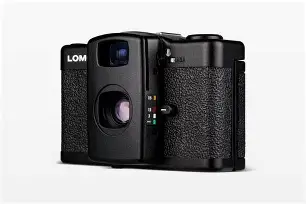
The first thing I noticed when I unboxed my unit was the weight. For such a small object, it feels remarkably dense. I’ve owned plenty of plastic point-and-shoots from the late 90s, the kind you find for five dollars at thrift stores, but this feels different. It’s got that signature Minitar-1 32mm f/2.8 lens tucked behind those sliding metal "barn doors." Opening and closing those doors with the flick of the bottom lever became a sort of tactile obsession for me during my first week. There is a mechanical "click-clack" that feels purposeful.
I remember my first roll—a simple box of 400 ISO color negative film. I took it out on a rainy Tuesday in the city. One thing that immediately bothered me was the zone focusing system. In an age where my smartphone tracks eyes in real-time, moving a lever between "0.8m," "1.5m," "3m," and "infinity" felt like a regression. I missed the focus on three of my first ten shots because I simply forgot to check the lever. But after that initial learning curve, I started to realize that this camera isn’t about precision. It’s about a specific kind of momentum.
Detailed Performance Analysis: The Minitar-1 Magic
After developing about twenty rolls of film through this body, I can confidently speak to what makes the image quality unique. It isn’t sharp in the traditional sense, but it is high-contrast. The Minitar-1 lens is famous for its vignetting—the way the corners of the frame go dark—and I found that in 2026, this look is more relevant than ever. When I look at my digital photos, I often find myself adding artificial vignettes to create a sense of focus. With the Lomo LC-A, it’s baked into the glass. It creates a natural "tunnel vision" that pulls the viewer into the center of the frame.
What I found especially surprising was how the camera handled low light. It features an automated exposure system that can keep the shutter open for up to two minutes if necessary. I’ve taken 30-second exposures at night by simply propping the camera on a trash can or a park bench. Because it’s an analog leaf shutter, there’s no "mirror slap" vibration. The results often have this painterly, smeared quality where lights streak across the frame, but the stationary objects remain soulfully rendered. I noticed that when I used higher-speed films like 800 ISO, the grain combined with the lens’s natural saturation created colors that I simply can’t replicate in Lightroom without a lot of effort.
Handling and Ergonomics
In my experience, the ergonomics are a mixed bag. I love that it’s small enough to fit in a pocket, but I found the film advance wheel to be a bit abrasive on my thumb after a long day of shooting. Unlike some vintage cameras with a smooth lever, this uses a plastic thumbwheel. It’s sturdy, but it’s not "luxurious." Another observation: the viewfinder is tiny. It’s essentially just a glass window to give you a rough idea of your framing. It doesn't show you what the lens sees perfectly, so I often found myself cutting off the tops of buildings or people's heads until I learned to "aim high" for close-up shots.
One thing that truly impressed me, however, was the "Multiple Exposure" switch. You can flick a tiny lever on the side and cock the shutter without advancing the film. I spent an entire weekend in San Francisco doing nothing but double exposures—layering the Golden Gate Bridge over textures of rusted metal or flowers. In a world of digital layering, doing this physically on a strip of celluloid felt like a magic trick every time the lab sent back the scans.
Pros and Cons
- Pro: The Aesthetic. The heavy vignetting and saturated colors provide a "finished" look to photos without needing post-processing.
- Pro: Compact Portability. It is truly a "carry everywhere" camera that doesn't scream "photographer," making it great for candid street shots.
- Pro: Long Exposure Capability. The auto-exposure system is surprisingly smart at night, allowing for beautiful light trails.
- Pro: Build Quality. It feels like a tool that can survive a drop, unlike many modern electronic gadgets.
- Con: The Price of Film. In 2026, shooting film is an expensive hobby. You really have to make every shot count.
- Con: Zone Focusing Errors. If you aren't disciplined, you will end up with many blurry shots, especially in the 0.8m to 1.5m range.
- Con: Battery Dependency. The shutter is electronically controlled. If those three little button cells die, the camera is a paperweight until you replace them.
- Con: Small Viewfinder. It’s difficult to use if you wear glasses, and it doesn't offer much accuracy for tight framing.
Comparative Analysis: Lomo LC-A vs. The Competition
To give you a better idea of where this camera sits in the 2026 landscape, I’ve put together a comparison table based on my experience with other popular compact film cameras that people often consider alongside the Lomo.
Looking for the best Electronics deals on Amazon?
Browse Now →| Feature | Lomography Lomo LC-A | Olympus XA | Generic Plastic Point-and-Shoot |
|---|---|---|---|
| Lens Type | 32mm f/2.8 Minitar-1 (Glass) | 35mm f/2.8 Zuiko (Glass) | 31mm f/9-f/11 (Plastic) |
| Focusing | Zone Focus (4 steps) | True Rangefinder | Fixed Focus |
| Exposure | Programmed Auto (Long Exp.) | Aperture Priority | Fixed Shutter/Aperture |
| Image Character | Vignetted, High Contrast | Sharp, Realistic | Soft, Dreamy, Lo-Fi |
| Build Material | Metal and Heavy Plastic | High-grade Hard Plastic | Lightweight Plastic |
Comparing these three, I noticed that the Lomo LC-A occupies a strange middle ground. The Olympus XA is a "better" camera technically—it’s sharper and more precise—but the Lomo is more "fun." The images from the Lomo have a personality that the Olympus lacks. Conversely, while a cheap plastic point-and-shoot is lighter and easier to use, the Lomo feels like a professional instrument by comparison because of its glass lens and advanced light meter.
The 2026 Buying Guide: What to Look For
If you’re thinking about picking one of these up today, I have a few hard-earned tips from my own journey. I’ve seen a lot of people buy these second-hand only to be disappointed when they realize a few key things about the maintenance and operation of a 35mm film camera in the current year.
Check the Light Seals
In my experience, the foam light seals on the back door of these cameras are usually the first thing to go. On my second month of use, I noticed a consistent pink "streak" across the left side of my images. It turned out the foam had perished. It’s an easy fix—you can use black yarn or specialized light seal foam—but it’s something you should check immediately. Open the back and see if the black foam feels sticky or if it's crumbling into dust.
Verify the Meter
Because the LC-A relies on its internal meter to set the shutter speed, you need to make sure those sensors are still accurate. I always recommend testing the camera without film first. Turn it on (open the lens cover), point it at a bright light, and fire the shutter. Then point it at a dark corner and fire it again. You should hear a distinct difference in the length of the "click." If the shutter speed sounds exactly the same in both situations, the electronics are likely faulty.
The ISO/ASA Dial
One thing that bothered me on the model I purchased was the ISO dial. It’s located on the front of the camera and it’s very small. It can be easily bumped when you’re pulling the camera out of your pocket. I’ve accidentally shot half a roll of 400 ISO film at the 100 ISO setting because the dial slipped. I eventually put a tiny piece of black gaffer tape over mine once I’d set it for the roll I was using. I highly recommend doing the same.
Battery Life Awareness
I noticed that the batteries (it usually takes three LR44 or SR44 cells) last a surprisingly long time—about six months for me—but they tend to fail without much warning. There is a small red LED inside the viewfinder that light ups when you press the shutter halfway to show the battery is good. Make it a habit to check that light every time you start a new day of shooting. In 2026, it’s not always easy to find a convenience store that stocks button cells in the middle of a park.
Personal Reflections: Why I Keep Using It
You might ask why anyone would bother with this in 2026. After all, I have a mirrorless camera that can shoot 40 frames per second and autofocus on a bird's eye from a hundred yards away. But after testing the Lomo LC-A for months, I realized that I don't use it for the same reason I use my digital gear. I use it because it changes the way I interact with the world.
Discover deals on Electronics — updated daily.
View Offers →When I have the Lomo in my hand, I stop looking for "perfection." I stop worrying about whether the highlight on the forehead is blown out or if the noise levels in the shadows are acceptable. Instead, I look for shapes, colors, and moments. I’ve found that some of my favorite photos from the last year are technically "bad"—they are slightly blurry, deeply vignetted, and have heavy grain. But they *feel* the way the memory feels. There is a nostalgia built into the lens that makes a mundane Tuesday afternoon look like a scene from a movie.
One specific memory stands out: I was at a friend's outdoor wedding. Everyone had their high-end smartphones out, capturing 4K video and HDR bursts. I just had the Lomo. I took one shot of the couple laughing under a tree. When I got that photo back a week later, it had this warm, golden glow that none of the digital shots had. The vignetting framed them perfectly. It wasn't the "clearest" photo of the day, but it was the one that they ended up printing and hanging on their wall. That, to me, is why this camera remains relevant.
Technical Specifications Breakdown
For those who love the nitty-gritty details, here is a quick overview of what is powering this little box. Even though it's analog, the engineering choices dictate the "Lomo" look.
- Film Format: Standard 35 mm film. This is great because, despite the rise of digital, 35mm remains the most accessible and easiest film to get developed in 2026.
- Lens: 32mm f/2.8 glass lens. The wide-angle nature is perfect for street photography but wide enough that it causes that famous distortion and fall-off at the edges.
- Aperture Range: f/2.8 to f/16. In its "Auto" mode, the camera chooses this for you, but you can manually set the aperture (though doing so defaults the shutter to 1/60th of a second).
- Shutter Speed: 1/500th of a second to unlimited (auto-exposure). This is the secret sauce for night photography.
- Flash: It has a standard hot-shoe on top. I’ve used it with a small manual flash, and it works perfectly for that "party" look with harsh shadows and bright subjects.
Conclusion
After six months of rigorous use, I can honestly say that the Lomography Lomo LC-A is not for everyone. If you are looking for clinical sharpness or the reliability of modern electronics, you will likely find it frustrating. I was certainly frustrated at times—especially when I’d get a roll back and realize I’d left the focus lever on 0.8m for a landscape shot. However, as a creative tool, it is almost peerless in its ability to produce images with heart, character, and a sense of timelessness.
In 2026, we are surrounded by images that are too sharp, too balanced, and too predictable. The Lomo LC-A is the antidote to that. It’s a camera that forces you to embrace the "glitch" and find the beauty in the imperfection. It has taught me more about composition and lighting in a few months than years of digital shooting did, simply because I had to slow down and work with its quirks. It’s a rugged, pocketable companion that turns everyday life into a cinematic narrative. Despite its age and its technical "flaws," it’s a brilliant piece of gear that I don't plan on putting down any time soon. If you’re willing to accept its personality and the costs of shooting film, it will reward you with photos that feel truly alive.